A suspended account means all of your ads stop running. That is different from a disapproved ad, where only one ad stops showing. The good news: most suspensions have a specific reason, and handling things in the right order gives you a better chance when you appeal.
1. Read the notice in your account carefully
Google always shows a notice in the account and sends an email naming the policy that was violated. This is the most important piece of information, because every next step depends on it.
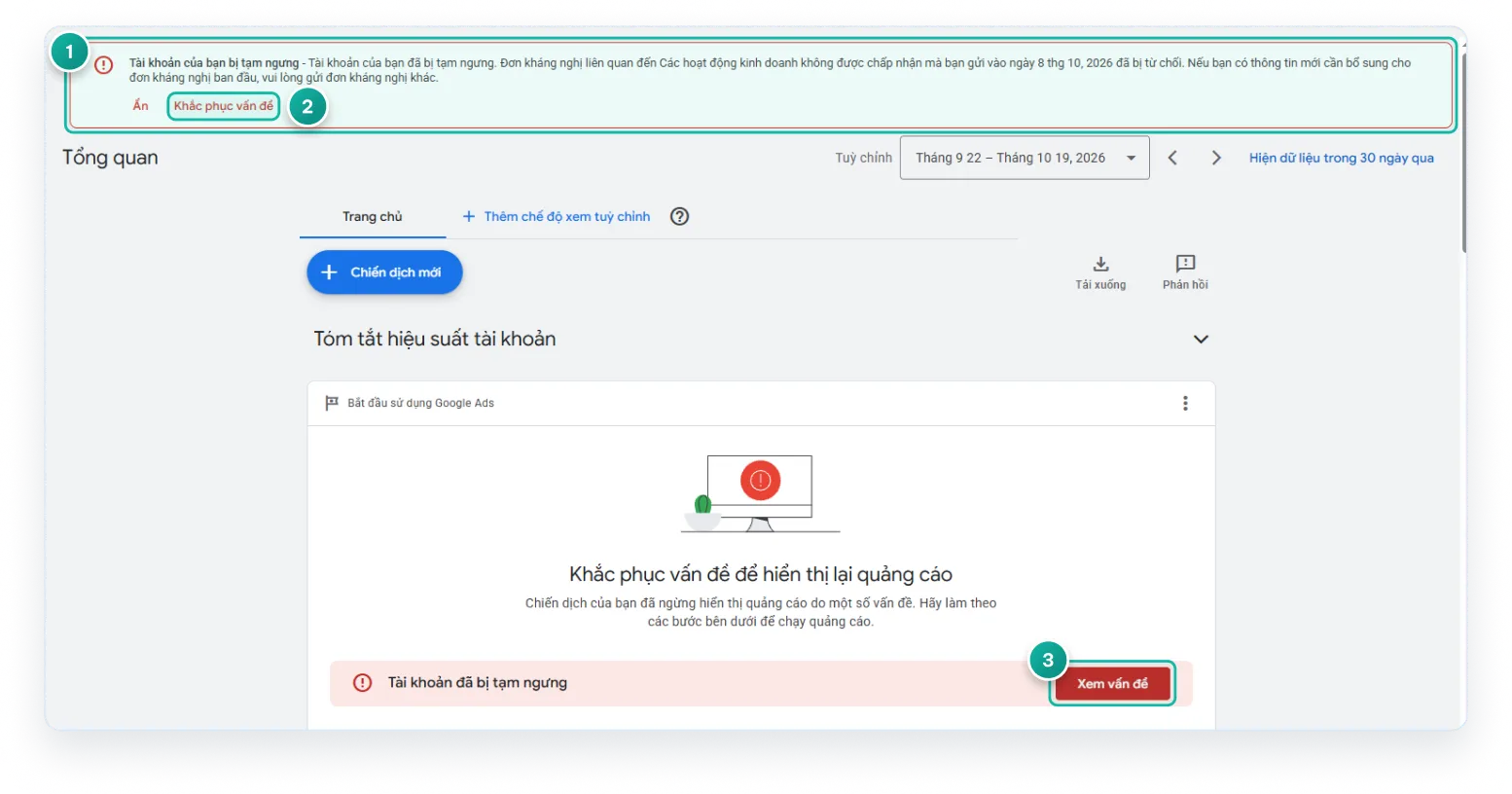
In the example above (Vietnamese interface): (1) the banner states the suspension reason and appeal status, (2) the Fix issue button opens guidance, and (3) View issue opens the details in Policy manager.
2. Common reasons for suspension
- Suspicious payments: the cardholder name doesn’t match the payments profile, cards change frequently, or payment activity looks unusual.
- Misrepresentation: missing business information, exaggerated claims, or hidden fees.
- Unacceptable business practices: signs of scams, impersonation, or unclear products.
- Circumventing systems: opening new accounts to keep running, or hiding the real landing page (cloaking).
- Advertiser verification not completed on time.
Egregious violations such as Circumventing systems or Unacceptable business practices can lead to suspension without prior warning.
3. Do’s and don’ts
Do
- Read the reason in the notice and the email carefully.
- Fix your website, ad content or payments profile to address that exact reason.
- Appeal with a clear explanation and the right supporting documents.
Don’t
- Open a new account to keep running content you haven’t fixed. Google may suspend the linked accounts too.
- Appeal before you’ve fixed the problem.
- Send repeated, low-effort appeals.
4. When should you appeal?
Only once you’ve fully fixed the underlying cause. Also note: since 21 July 2026, Google no longer accepts in-account appeals for policy decisions older than 6 months, so don’t wait too long.
Appealing to Google is free. If you’d like someone to help analyze the reason and prepare your documents, AdsNest can help. The final decision always rests with Google.
Sources
AdsNest Editorial. Our articles are based on official Google Ads documentation and reviewed regularly. See our Editorial policy.


 Message on Telegram
 Message on WhatsApp